








As we navigate the economic landscape of 2025, small businesses continue to face liquidity challenges amid fluctuating markets and rising costs. Effective cash flow management isn’t just a best practice—it’s a survival skill. Poor cash flow remains a leading cause of business failures, with studies showing it’s responsible for a vast proportion of closures even among profitable companies.

In this post, we’ll explore practical strategies to keep your cash flowing smoothly, drawing from the latest insights and tools available today.
What is Cash Flow and Why Does It Matter?
Cash flow refers to the movement of money in and out of your business. Positive cash flow means more money coming in than going out, allowing you to pay bills, invest in growth, and weather unexpected downturns. Negative cash flow, on the other hand, can lead to missed payments, debt accumulation, or even closure. For small businesses, where margins are often tight, mastering this is crucial. Recent data indicates that 58% of small and medium-sized businesses (SMBs) are turning to embedded finance solutions to manage these strains, highlighting a shift toward innovative tools for liquidity.
Key Strategies for Effective Cash Flow Management
Here are proven tactics tailored for small businesses in 2025. Implementing these can help stabilize your finances and support sustainable growth.
1. Understand and Track Your Cash Flow
Start by creating a cash flow statement or budget to monitor inflows (like sales and loans) and outflows (expenses and payments). Use tools like QuickBooks or Xero for real-time tracking. Regularly review this—aim for weekly checks—to spot patterns and issues early. Categorize spending to identify where money is going, such as fixed costs versus variable ones.
2. Forecast Cash Flow Proactively
Don’t just react—predict. Use historical data to forecast future cash needs, accounting for seasonal variations or economic trends. Tools like cash flow forecasting software can help simulate scenarios. For instance, prepare for slower periods by building buffers in advance.
3. Speed Up Accounts Receivables
Encourage faster payments from customers. Offer incentives for early payments, like discounts, and automate invoicing to reduce delays. Stay on top of billing—send reminders promptly and consider factoring services if needed. Modernizing processes, such as using digital payment platforms, can significantly improve this.
4. Manage Payables and Expenses Wisely
Negotiate better terms with vendors, like extended payment windows, to align outflows with inflows. Control expenses by cutting unnecessary costs—review subscriptions and opt for leasing over buying where possible. Implement inventory management systems to avoid overstocking, which ties up cash.
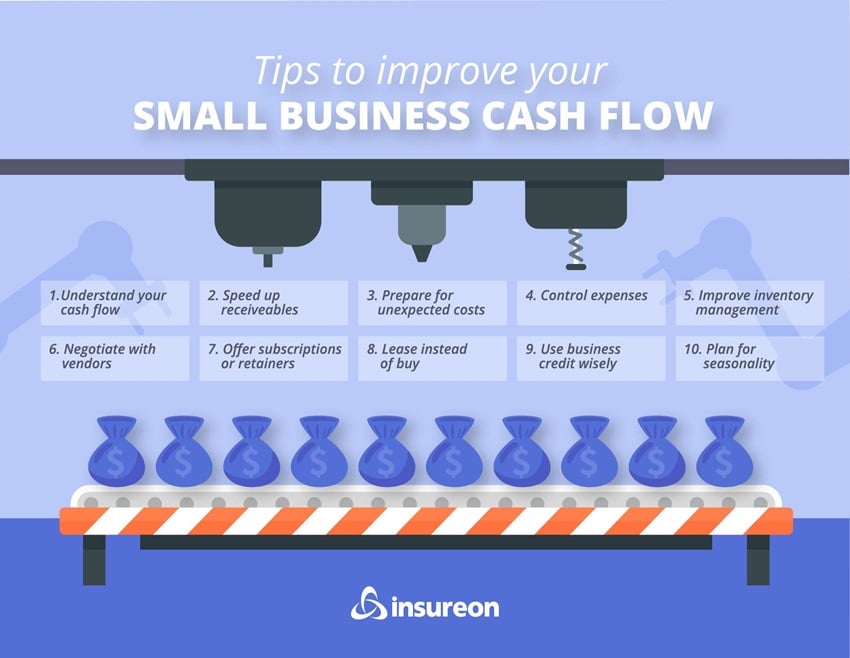
How to Improve Cash Flow In Your Small Business | Insureon
5. Leverage Technology and Embedded Finance
In 2025, tech is your ally. Adopt point-of-sale systems integrated with inventory for seamless operations. Embedded finance—features like instant loans or payment plans built into your banking app—is gaining traction, with over half of SMBs using it for better cash management. Automate payables and receivables to ensure timeliness.
6. Build Reserves and Explore Funding Options
Aim to maintain a cash reserve covering 3-6 months of expenses. If short, consider lines of credit or small business loans wisely. Focus on increasing sales without proportionally hiking expenses to boost inflows organically.
Tools and Resources for 2025
- Software: Melio for payments, Dryrun for forecasting.
- Banking: Dedicated business accounts with analytics from providers like Bank of America.
- Professional Help: Consult a CFO service for tailored advice.
Conclusion
Managing cash flow effectively in 2025 requires vigilance, smart tools, and proactive strategies. By understanding your finances, forecasting ahead, and leveraging modern solutions, your small business can thrive amid uncertainties. Start small—track your cash flow this week—and build from there. For more personalized advice, consider reaching out to financial experts or exploring the resources linked above.