








As a small business owner in 2025, audits might sound daunting, but they’re essential tools for ensuring financial health, regulatory compliance, and operational efficiency. Whether it’s an internal review to catch issues early or preparing for an external IRS audit, understanding the process can turn potential stress into strategic advantage. With recent updates like extended I-9 audit guidelines and enhanced EPA resources for small entities, staying proactive is more important than ever.
What Is a Compliance Audit? Comprehensive Guide in 2023
Why Audits Matter for Small Businesses
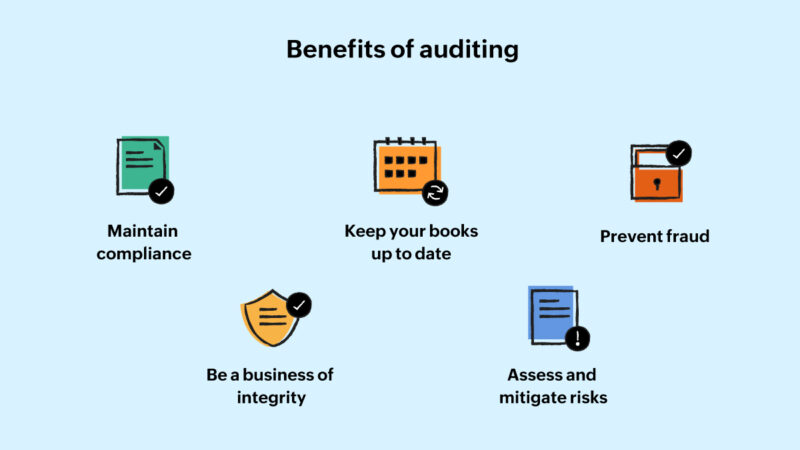
Regular audits help identify risks, prevent fraud, maintain compliance, and build investor confidence. For small businesses, they can uncover inefficiencies in financial records or operations, potentially saving thousands in penalties or lost revenue. Benefits include keeping books up-to-date, assessing risks, and fostering a culture of integrity. In 2025, with evolving regulations like those in the US Business Compliance Guide, audits are crucial for avoiding fines from bodies like the IRS or EPA.
What is an audit? – Essential Business Guides
Types of Small Business Audits
Small businesses may encounter several audit types:
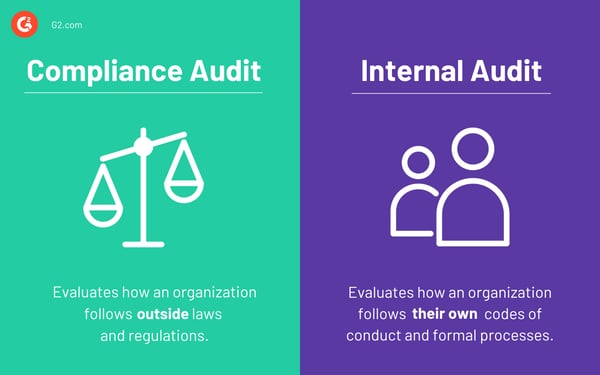
- Internal Audits: Conducted in-house to evaluate controls, processes, and compliance. Ideal for spotting issues before they escalate.
- External Audits: Performed by independent auditors, often for financial statements or regulatory requirements.
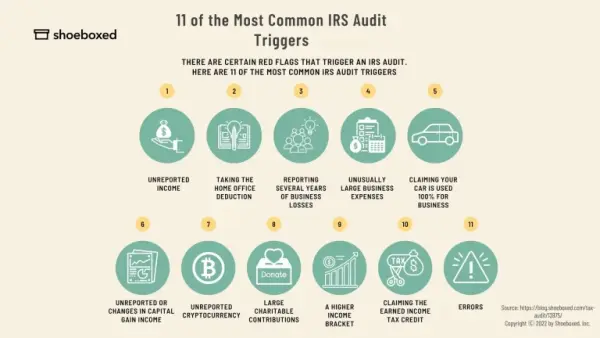
- IRS Tax Audits: Focused on tax returns, triggered by discrepancies like unreported income or large deductions.
- Compliance Audits: Ensure adherence to laws like GDPR, CCPA, or industry-specific rules (e.g., I-9 for employment).
- Operational Audits: Review business processes for efficiency, such as inventory or payroll.
Steps to Conduct an Internal Audit
Follow these steps for a thorough internal audit, tailored for small businesses:
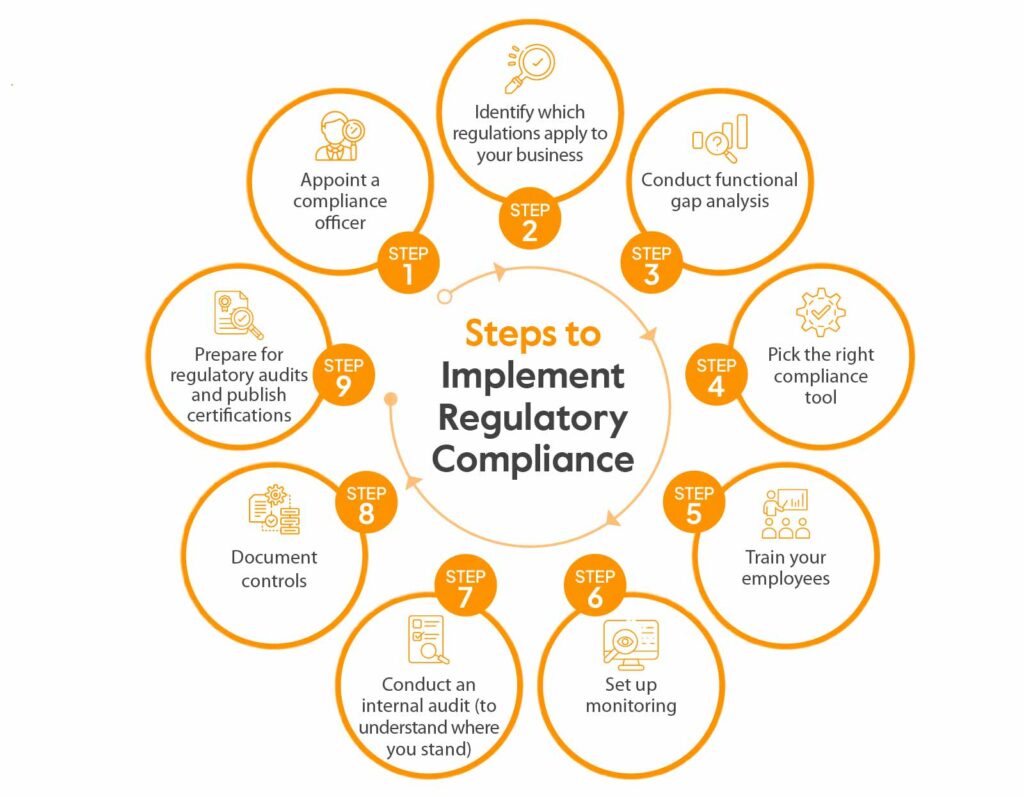
- Define the Scope and Objectives: Identify areas like financial records, inventory, or compliance. Set clear goals, such as risk assessment.
- Gather Documentation: Collect financial statements, receipts, contracts, and policies. Use digital tools for organization.
- Review and Test Controls: Examine transactions, reconcile accounts, and test for accuracy. Involve subject matter experts if needed.
- Document Findings and Recommend Improvements: Note discrepancies and suggest fixes, like better internal controls.
- Follow Up: Implement changes and schedule regular reviews.
Mastering Regulatory Compliance: A Guide with Insights
Preparing for an IRS or External Audit
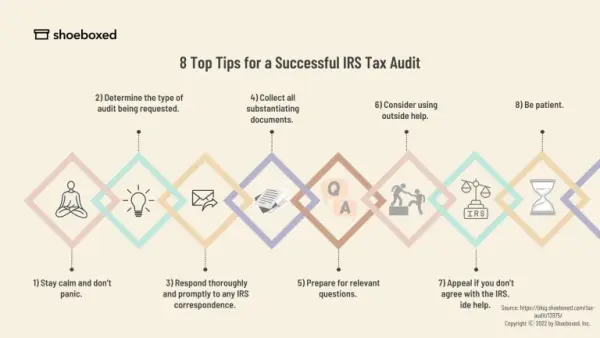
To minimize stress during an IRS audit:
- Organize Records: Keep detailed, digital records of income, expenses, and deductions. Reconstruct missing info accurately.
- Understand Triggers: Avoid red flags like home office deductions without proper setup or large charitable contributions.
- Respond Promptly: Delay if needed, but provide thorough responses. Don’t host the audit at your business.
- Seek Professional Help: Consult accountants or lawyers for complex issues.
Small Business Audit Checklist
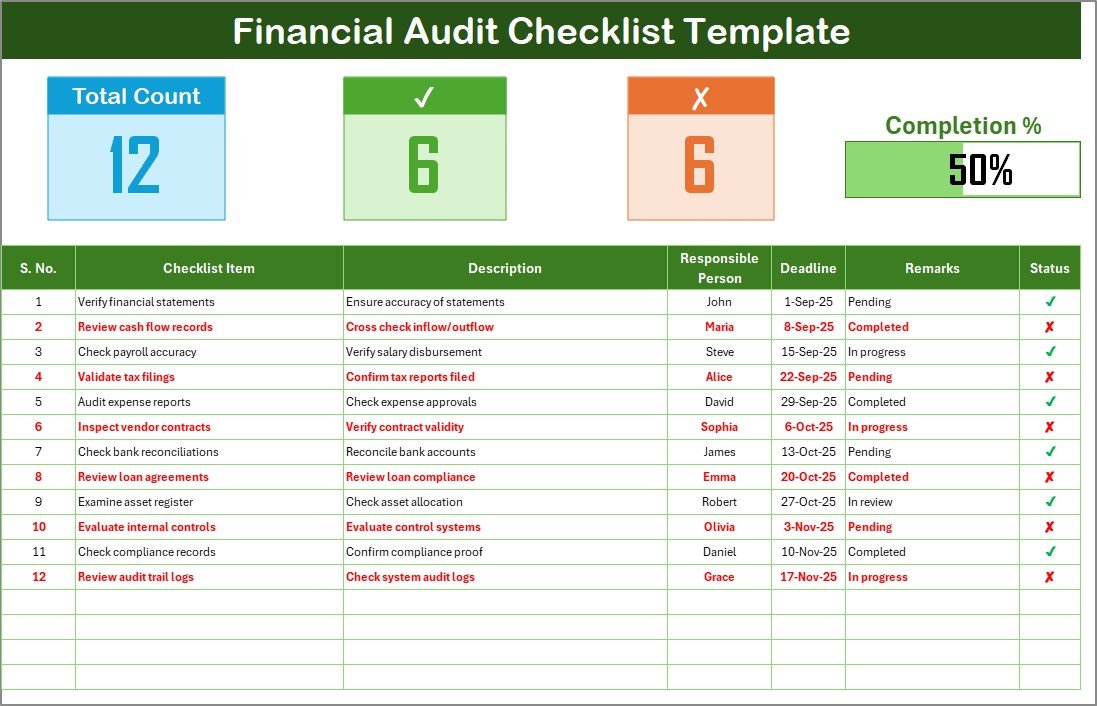
Use this customizable checklist to stay prepared:
| Area | Items to Review | Status |
|---|---|---|
| Financial Records | Verify statements, cash flow, payroll accuracy, tax filings | |
| Internal Controls | Inspect vendor contracts, bank reconciliations, asset registers | |
| Compliance | Check I-9 forms, environmental regs, data privacy | |
| Operations | Review inventory, sales processes, employee policies | |
| Risks | Evaluate fraud prevention, insurance coverage |
Templates like this financial audit checklist can be adapted for your needs.
Financial Audit Checklist in Excel – Next Gen Templates
Tips for Successful Audits
- Stay Organized Year-Round: Use software for real-time tracking to avoid last-minute scrambles.
- Train Your Team: Ensure employees understand compliance roles.
- Conduct Pilot Audits: Start small to build confidence.
- File On Time and Be Honest: Timely, accurate filings reduce audit risks.
- Leverage Resources: Free guides from SBA or EPA can simplify the process.
Resources for Small Business Audits
Dive deeper with these trusted sources:
- US Business Compliance Guide 2025
- IRS Audits for Small Businesses
- EPA Small Business Compliance
- I-9 Audit Guide
In summary, audits are investments in your business’s longevity. By integrating them into your routine, you’ll not only comply with 2025 regulations but also drive better decision-making and growth. If you’re facing an audit soon, start with a self-assessment today!