






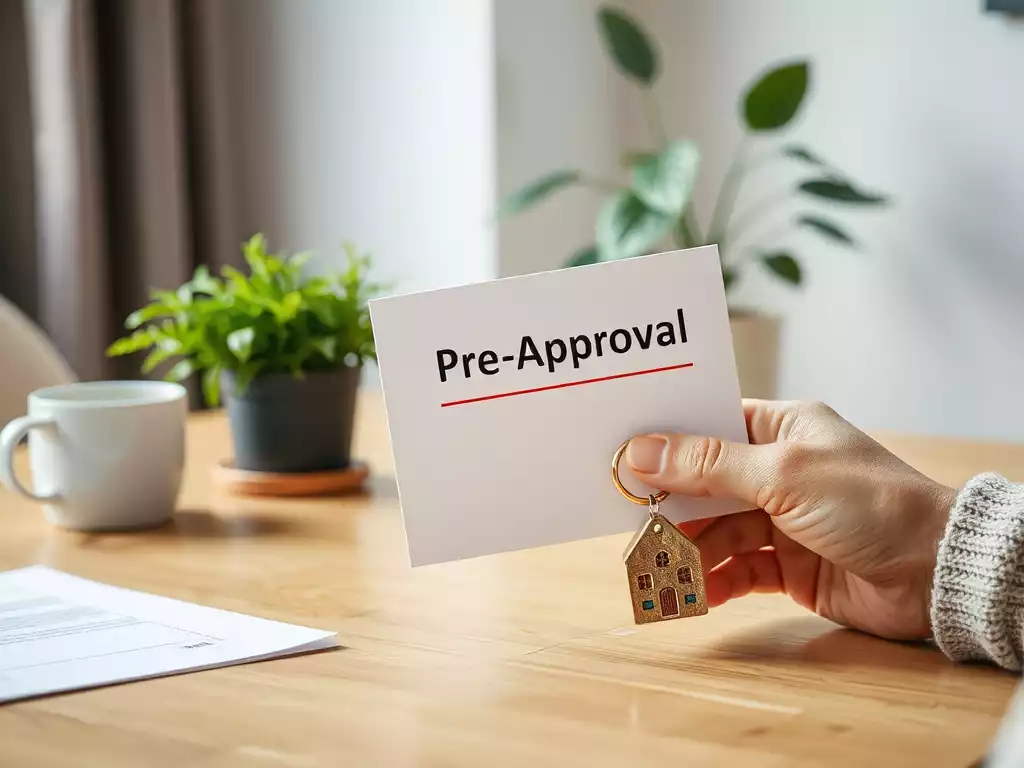

What is Mortgage Pre-Approval?
The critical first step to successful home buying
Starting your home search without mortgage pre-approval is like shopping with an unknown credit limit—you don’t know what you can actually afford, and sellers won’t take you seriously. Pre-approval is the foundational step that transforms you from a casual browser into a credible buyer, giving you the confidence to make offers and the leverage to negotiate effectively.
In today’s competitive Arizona real estate market, pre-approval isn’t just helpful—it’s essential. This comprehensive guide explains what mortgage pre-approval is, how it differs from pre-qualification, why you need it before house hunting, the step-by-step process to get pre-approved, and how to maximize your approval amount.
Understanding Pre-Approval
What pre-approval means and what it isn’t
Mortgage pre-approval is a comprehensive evaluation of your financial situation by a lender who determines how much they’re willing to lend you for a home purchase. Unlike a casual estimate, pre-approval involves:
- Completing a full loan application
- Providing detailed financial documentation (income, assets, debts)
- Authorization for a credit check and credit score review
- Verification of employment and income
- Analysis of your debt-to-income ratio
- Review by an actual underwriter or automated underwriting system
Once approved, you receive a pre-approval letter stating the maximum loan amount, estimated interest rate, and loan program you qualify for. This letter is typically valid for 60-90 days and demonstrates to sellers that you’re a serious, qualified buyer.
What Pre-Approval Is NOT
It’s important to understand the limitations:
- Not a guarantee: Final approval depends on property appraisal, title, and maintaining your financial status
- Not property-specific: Pre-approval is for a loan amount, not a specific home
- Not permanent: Your financial situation or rates can change before closing
- Not a commitment to borrow: You’re not obligated to use that lender
Pre-Qualification vs. Pre-Approval
Understanding the critical differences
Pre-Qualification
Process: Quick, informal estimate based on self-reported information
Documentation: None or minimal required
Credit Check: Usually soft pull or none
Time Required: 15-30 minutes
Seller Impact: Minimal credibility; shows casual interest only
Best For: Initial budget planning and early exploration
Pre-Approval ✓
Process: Comprehensive financial review and underwriting evaluation
Documentation: Extensive verification (paystubs, tax returns, bank statements)
Credit Check: Full hard inquiry that impacts score
Time Required: 1-3 days for decision
Seller Impact: Strong credibility; demonstrates serious buyer status
Best For: Active house hunting and making offers
Why You Need Pre-Approval
The competitive advantages pre-approval provides
Know Your True Budget
Online calculators provide estimates, but only pre-approval reveals what you actually qualify for. You might discover you can afford more than expected—or that you need to adjust your search criteria. Either way, you avoid the heartbreak of falling in love with homes outside your price range or missing opportunities because you assumed you couldn’t afford them.
Strengthen Your Offers
In competitive markets like Phoenix and Scottsdale, multiple offers are common. Sellers and listing agents prioritize pre-approved buyers because they represent less risk of the deal falling through. Your pre-approval letter can be the deciding factor when competing against similar offers—or give you leverage to negotiate better terms like lower closing cost contributions or quicker closing timelines.
Move Quickly on the Right Home
Desirable properties receive offers within days—sometimes hours—of listing. Without pre-approval, you’ll scramble to gather documents and apply for financing while other buyers submit offers. By the time you’re ready, the home is gone. Pre-approval puts you in position to act immediately when you find the right property, giving you a critical time advantage over unprepared buyers.
Identify and Resolve Issues Early
Pre-approval often reveals credit issues, documentation gaps, or debt problems that need addressing. It’s far better to discover these during pre-approval—when you have time to fix them—than during the contract period when you risk losing your earnest money and dream home. Whether it’s correcting credit report errors, paying down debt, or providing additional income documentation, you’ll have the opportunity to strengthen your application.
Lock in Interest Rates
While pre-approval itself doesn’t lock your rate, it positions you to act quickly once you’re under contract. Some lenders allow you to lock a rate at pre-approval, giving you protection if rates rise while house hunting. Even without an immediate lock, knowing your approved rate range helps you calculate accurate monthly payments and make informed decisions about affordability.
Streamline the Closing Process
Since much of the financial review happens during pre-approval, the underwriting process after you’re under contract moves faster. Your lender already has your documentation, knows your financial situation, and has verified your employment. This means less paperwork, fewer surprises, and a smoother path to closing—often shaving 7-10 days off the typical timeline.
The Pre-Approval Process
Step-by-step guide to getting pre-approved
Step 1: Gather Required Documentation
Before contacting a lender, assemble these documents:
Income Documentation:
- Last 2 years W-2s or tax returns
- Recent paystubs (30 days)
- Proof of other income (bonuses, commissions, rental, etc.)
Asset Documentation:
- Bank statements (2 months)
- Investment account statements
- Retirement account statements
- Gift letter (if using gift funds)
Employment Information:
- Current employer contact information
- 2-year employment history
- If self-employed: business tax returns, P&L statements
Additional Items:
- Government-issued photo ID
- Social Security number
- Address history (2 years)
- Information on debts (auto loans, credit cards, student loans)
Step 2: Complete the Loan Application
Your loan officer will help you complete a formal mortgage application (Form 1003). This comprehensive form covers your financial situation, employment history, assets, debts, and property intentions. Be thorough and honest—inaccuracies can delay approval or cause problems later. The application typically takes 30-60 minutes to complete, and your loan officer will guide you through each section.
Step 3: Credit Check and Analysis
The lender will pull your credit report from all three bureaus and calculate your credit score. They’ll review your payment history, outstanding debts, credit utilization, and any negative items like collections or late payments. This hard inquiry may temporarily lower your score by 5-10 points, but multiple mortgage inquiries within 45 days count as a single inquiry, so you can shop multiple lenders without additional credit impact.
Step 4: Underwriting Review
Your application and documents are submitted to underwriting—either an automated system (DU/LP) or a human underwriter. They verify employment, calculate your debt-to-income ratio, review assets for down payment and reserves, and assess overall creditworthiness. This process typically takes 1-3 business days. The underwriter may request additional documentation or clarification on certain items.
Step 5: Receive Your Pre-Approval Letter
Once approved, you’ll receive an official pre-approval letter stating your maximum loan amount, estimated interest rate, and loan program. This letter is typically valid for 60-90 days and can be submitted with purchase offers. Your loan officer can provide updated letters as needed or adjust the amount for specific properties. Keep this letter confidential—showing sellers your maximum approval amount can weaken your negotiating position.
Maximizing Your Pre-Approval Amount
Strategies to increase your buying power
✓ Pay Down High-Interest Debt
Every $200 in monthly debt you eliminate increases buying power by $40,000-50,000.
✓ Improve Your Credit Score
A 40-60 point increase can qualify you for better rates and loan programs with higher limits.
✓ Document All Income
Include bonuses, commissions, overtime, rental income, and side gigs if properly documented for two years.
✓ Increase Your Down Payment
Larger down payments reduce your loan amount and eliminate mortgage insurance, improving overall affordability.
✓ Consider a Co-Borrower
Adding a qualified co-borrower combines incomes and can significantly increase your loan amount.
✓ Avoid Major Financial Changes
Don’t change jobs, open new credit, or make large purchases during the home buying process.
✓ Maintain Stable Employment
Two years of steady employment in the same field strengthens your application considerably.
✓ Shop Multiple Lenders
Different lenders have different underwriting guidelines—one may approve a higher amount than another.
Common Pre-Approval Mistakes to Avoid
Applying too close to house hunting: Get pre-approved 2-3 months before you plan to seriously shop, giving time to address any issues that arise.
Getting pre-approved for the maximum amount: Just because you qualify for $500,000 doesn’t mean you should spend that much. Consider your comfort level and other financial goals.
Letting your pre-approval expire: Pre-approvals typically last 60-90 days. If your search extends longer, request an updated letter before it expires.
Making financial changes after pre-approval: Opening new credit cards, buying a car, changing jobs, or making large purchases can invalidate your approval.
Confusing pre-approval with final approval: Pre-approval is conditional. Final approval requires property appraisal, title work, and verification that nothing has changed in your financial situation.
Pre-Approval Resources
Tools and information to help you prepare
Get Pre-Approved Today
Don’t start house hunting without knowing your buying power. I can pre-approve you quickly—often within 24-48 hours—and provide the documentation you need to compete effectively in Arizona’s market. As an experienced mortgage broker, I’ll compare multiple lenders to find you the best rates and terms while maximizing your approval amount. Let’s get you pre-approved and ready to make your move.
Fast pre-approval with competitive rates. Most applications approved within 48 hours.
Todd Uzzell | Arizona Mortgage Expert | NMLS# 1525192
Equal Housing Opportunity | Licensed in Arizona