








A property deed is a legal document that transfers ownership of real estate from one party (the grantor or seller) to another (the grantee or buyer). It serves as proof of title, outlining the rights and interests in the property. Deeds are essential in real estate transactions because they ensure the transfer is legally binding, protect the buyer’s interests, and can include warranties against title defects. In essence, without a properly executed and recorded deed, ownership isn’t officially recognized, which could lead to disputes or complications in selling, refinancing, or inheriting the property.
Why Property Deeds Matter
Deeds are more than just paperwork—they establish a clear chain of title, which traces ownership history and helps prevent fraud or conflicting claims. Key importance includes:
- Legal Ownership: Confirms who holds the title and any restrictions, like easements or liens.
- Protection for Buyers: Certain deeds provide guarantees that the property is free from undisclosed issues.
- Tax and Financing Implications: Used for property taxes, mortgages, and estate planning.
- Public Record: Once recorded with the local county recorder’s office, it becomes public, allowing future buyers to verify history.
Failing to understand your deed could result in surprises, such as discovering shared access rights or unresolved debts.
Common Types of Property Deeds
There are several types of deeds, each offering different levels of protection and suited to specific situations. The most common include warranty deeds, quitclaim deeds, and grant deeds, but variations exist based on state laws. Here’s a breakdown:
| Type | Description | Protection Level | Best For |
|---|---|---|---|
| General Warranty Deed | Provides the highest protection; the grantor warrants the title is clear from all defects, even from previous owners. | High | Standard home sales where buyers want full assurance. |
| Special Warranty Deed | Warrants only against defects during the grantor’s ownership, not prior. | Medium | Foreclosures, commercial sales, or when full history isn’t guaranteed. |
| Quitclaim Deed | Transfers interest without warranties; no guarantee of clear title. | Low | Transfers between family, adding/removing spouses, or clearing title issues. |
| Grant Deed | Implies the property hasn’t been sold to others and is free of undisclosed liens (similar to special warranty). | Medium | Common in California and some states for residential transfers. |
| Bargain and Sale Deed | Conveys ownership without warranties, but implies the grantor has the right to sell. | Low | Estate sales or tax deeds where minimal guarantees are needed. |
Choose the type based on your relationship with the seller and risk tolerance—consult a real estate attorney for advice.
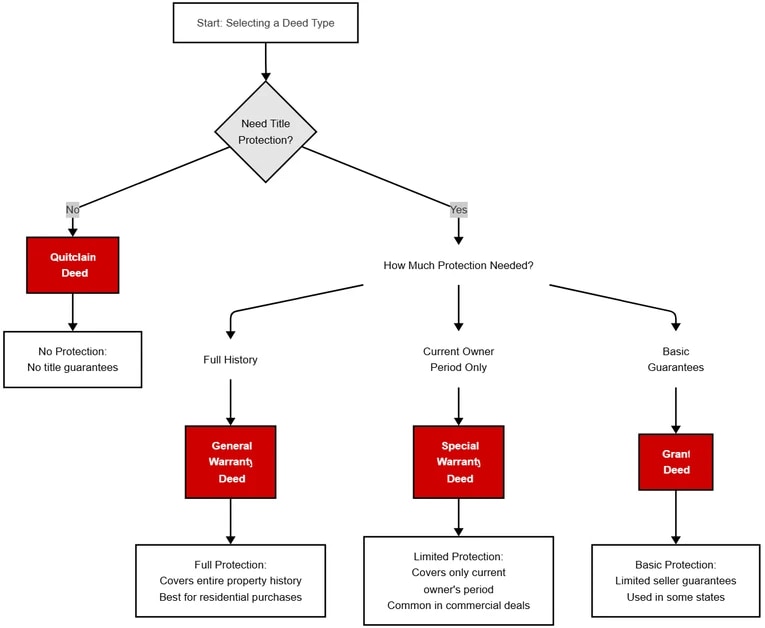
Special Warranty Deed: What It Covers, When to Use It
Key Elements in a Property Deed
A typical deed includes:
- Parties Involved: Names of grantor and grantee.
- Property Description: Legal description (e.g., lot number, metes and bounds) for precise identification.
- Consideration: The value exchanged (e.g., purchase price).
- Warranties or Covenants: Promises about the title’s quality.
- Signatures and Notarization: Must be signed, often notarized, and recorded.
- Date and Recording Info: When executed and filed.
To read a deed, start with the title type, then verify the description matches the property, and check for any exceptions or encumbrances.
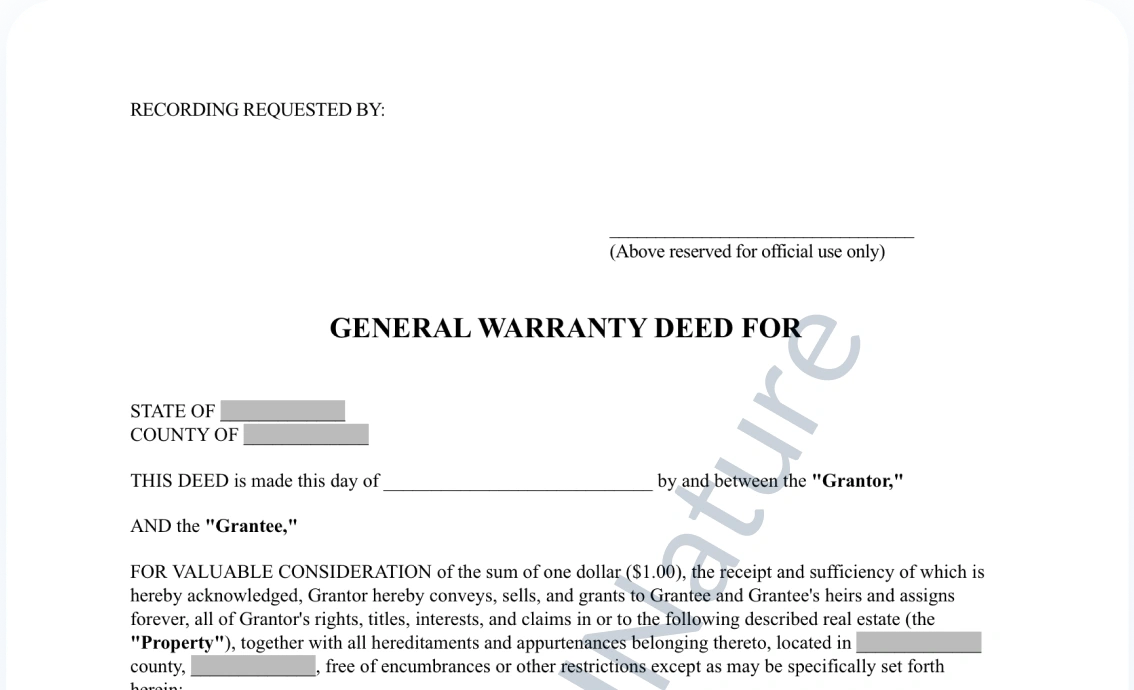
General Warranty Deed Form | Create & Print | LegalNature
Steps to Obtain and Verify a Property Deed
- During Purchase: Your title company or attorney handles drafting and recording.
- After Closing: Receive a copy; the original is recorded publicly.
- Verification: Search county records online or in person for the chain of title.
- Title Insurance: Recommended to protect against undiscovered issues.
If discrepancies arise, a title search or quiet title action may be needed.
Understanding deeds empowers you in real estate—always review with professionals to avoid pitfalls. For state-specific details, check local laws, as variations exist.