






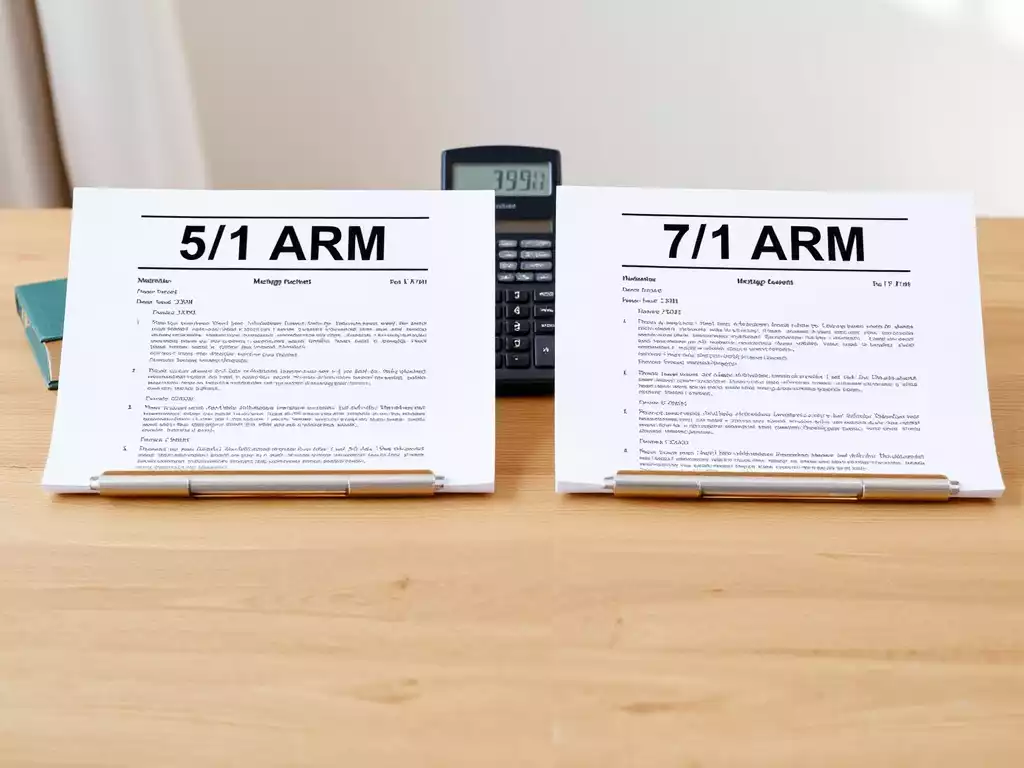

The world of adjustable-rate mortgages (ARMs) can seem daunting, but understanding the differences between options like the 5/1 and 7/1 ARMs can empower you to make the right financial choice. With varying terms and potential impacts on your budget, let’s break down the essential takeaways that will guide your decision-making!
What You Will Learn
- Adjustable-rate mortgages (ARMs) feature an initial fixed-rate period followed by fluctuations based on market indices.
- The main difference between 5/1 and 7/1 ARMs is the length of the fixed-rate term: five years for 5/1 and seven years for 7/1.
- ARMs generally offer lower initial interest rates compared to fixed-rate mortgages, making them attractive for first-time homebuyers.
- Monthly payments can increase significantly after the fixed-rate period ends, depending on market conditions.
- Consider your homeownership timeline to choose the best option: shorter for 5/1 ARMs and longer for 7/1 ARMs for greater stability.
- Your credit score and financial health significantly impact the rates you qualify for on ARMs, emphasizing the importance of evaluating your overall financial picture.
- Refinancing can be a viable option after the fixed-rate period; watch market trends to determine the best timing.
- Interactive tools like mortgage calculators can simplify decision-making by helping you visualize potential monthly payments and overall costs.
5/1 ARM vs. 7/1 ARM: Key Differences and Suitability
This visual highlights the main distinctions and ideal scenarios for choosing between a 5/1 and a 7/1 Adjustable-Rate Mortgage. For a broader perspective on mortgage options, consider exploring fixed vs. adjustable mortgages explained.
5/1 ARM
Fixed Period:
5 Years
Adjustment After:
Annual adjustments after 5 years
Initial Interest:
Potentially lower than 7/1 ARM
Best For:
- Short-term homeownership (under 5-7 years)
- Anticipating refinancing or moving soon
- Maximizing initial savings
7/1 ARM
Fixed Period:
7 Years
Adjustment After:
Annual adjustments after 7 years
Initial Interest:
Slightly higher than 5/1 ARM, but still competitive
Best For:
- Medium-term homeownership (6-9 years)
- Preferring longer payment predictability
- Balancing initial savings with stability
Common Drawbacks
Rate Adjustment Risk:
Payments can increase significantly after the fixed period if market rates rise.
Budget Uncertainty:
Less predictable monthly payments compared to fixed-rate mortgages.
Refinance Cost:
Refinancing involves closing costs and fees that can offset savings.
Key Factors to Consider
Homeownership Timeline:
How long do you plan to stay in the home?
Financial Stability:
Ability to handle potential payment increases.
Market Conditions:
Current and projected interest rate trends.
Credit Score:
Affects initial rates and refinancing options.
Decoding Adjustable-Rate Mortgages: 5/1 ARM vs. 7/1 ARM
When it comes to financing your home, navigating the world of mortgages can feel overwhelming! One popular choice is the adjustable-rate mortgage (ARM), specifically the 5/1 and 7/1 ARMs. Both options have their unique features that cater to different financial situations. Understanding these differences can help you make an informed decision that suits your homeownership needs.
In this section, we’ll dive into the basics of ARMs, compare the features of the 5/1 and 7/1 loans, and discuss who might benefit most from each option. So, let’s get started!
Understanding the Basics of ARMs: What are 5/1 and 7/1 Loans?
Defining Adjustable-Rate Mortgages
An adjustable-rate mortgage is a type of home loan where the interest rate can change over time, unlike fixed-rate mortgages which remain constant throughout the loan term. ARMs typically have an initial fixed-rate period followed by adjustments based on a specific index. This means that your monthly payments can fluctuate after the initial period ends, which can impact your long-term budget.
In the case of 5/1 and 7/1 ARMs, the numbers indicate the length of the fixed-rate term and the frequency of adjustments thereafter. For example, with a 5/1 ARM, you enjoy a fixed rate for the first five years, and then the rate adjusts annually. Meanwhile, the 7/1 ARM offers seven years of a fixed rate before entering annual adjustments.
Key Features of 5/1 and 7/1 ARMs
- Initial Fixed Rate: 5 years for 5/1, 7 years for 7/1
- Adjustment Frequency: Annual after initial period for both
- Potential for Lower Initial Rates: Generally lower than fixed-rate loans
- Rate Caps: Limits on how much rates can increase at each adjustment
These features make ARMs appealing to many first-time homebuyers or those who plan to move before the adjustment period begins. The lower initial rates can help save money during those early years! However, it’s crucial to consider how rate adjustments will impact your finances later on.

Comparing Fixed Rates: The Stability of 5 Years vs. 7 Years
How Long Do Rates Remain Fixed?
One of the most significant distinctions between the 5/1 and 7/1 ARMs is the duration of the initial fixed-rate period. While both options offer a reduction in initial interest rates, the 7/1 ARM provides a longer period of stability, which can be beneficial for those who prefer predictability in their monthly payments. If you plan to stay in your home for a longer time, the 7/1 ARM might be the better choice!
In contrast, the 5/1 ARM could be ideal for buyers who anticipate moving or refinancing within a shorter timeframe, as they can take advantage of the lower rates without worrying about long-term fluctuations.
What Happens After the Fixed Period Ends?
Once the fixed-rate period for both the 5/1 and 7/1 ARMs concludes, the interest rates begin to adjust. This adjustment is usually tied to a specific index, such as the LIBOR or the Treasury index, and includes a margin set by the lender. It’s essential to understand how these adjustments can affect your monthly payments and overall financial strategy. If you’re considering your first home purchase, understanding these dynamics is key to smart financial planning, and resources on first-time homebuyer education can be very helpful.
Higher rates can lead to increased monthly payments, which could strain your budget if you aren’t prepared. Evaluating your potential future financial situation and having a plan in place is crucial for homeowners considering either ARM option!
Interest Rate Dynamics: Trade-Offs Between 5/1 and 7/1 ARMs
Analyzing Initial Interest Rates
The initial interest rates for both 5/1 and 7/1 ARMs can be quite appealing. Typically, they start lower than fixed-rate mortgages, making homeownership more accessible for many buyers. However, it’s important to remember that these rates can vary based on market conditions and your credit profile.
Generally, the 7/1 ARM might offer slightly higher initial rates compared to the 5/1 ARM, reflecting the longer fixed period. This means that while you might save more in the short term with a 5/1 ARM, consider what your long-term financial objectives are before making your choice!
The Impact of Rate Adjustments on Monthly Payments
Once the initial period ends, rate adjustments can significantly impact your monthly payments. For instance, if market rates rise, your payments could increase, which is something to keep in mind when selecting between a 5/1 and 7/1 ARM. You want to ensure that you understand how these adjustments work and how they can affect your budget.
Calculating potential future payments based on rate adjustments can help you prepare financially. It’s always a good idea to consult with a mortgage professional, like myself, to clarify how these adjustments can impact your specific situation!
Understanding Index Rates and Margins for ARMs
Understanding the index rates and margins is critical when evaluating ARMs. The index is a benchmark interest rate that influences your ARM’s rate changes. Typically, lenders will add a margin—usually a fixed percentage—to the index to determine your adjusted rate. This is where the real cost may come into play after your initial fixed period ends.
By familiarizing yourself with various indices and margins, you can better predict how future adjustments will affect your payments. This information will empower you to make a more informed decision when choosing between a 5/1 ARM and a 7/1 ARM!
Who Should Choose a 5/1 ARM or 7/1 ARM?
Assessing Your Homeownership Timeline
Your homeownership timeline plays a significant role in deciding between a 5/1 and 7/1 ARM. If you plan to stay in your home for a shorter duration, the 5/1 ARM might be a great fit! It allows you to benefit from lower payments during the initial fixed-rate period.
For those looking for more stability and planning to stay longer, the 7/1 ARM could be a more suitable option, providing you with seven years of fixed payments. Knowing your plans can lead to significant savings and a smoother financial experience!
Factors Influencing Borrower Suitability
- Financial Stability: Evaluate your job security and income stability.
- Market Conditions: Consider current interest rates and economic trends.
- Future Plans: Think about whether you’ll be moving, refinancing, or paying off the loan early.
These factors are essential in determining which ARM structure best aligns with your financial goals. It’s important to take the time to assess your specific situation carefully!
Evaluating Your Credit Score and Financial Health
Your credit score can significantly affect the interest rates you qualify for on either ARM option. A higher credit score usually means lower rates, which can lead to substantial savings over time. Additionally, examining your overall financial health, including savings, debts, and income, will help you make a more informed decision.
If you’re uncertain about your financial standing or how it might impact your mortgage options, let’s chat! I’m here to help guide you through this process, ensuring you find the right mortgage solution that fits your needs!
Pros and Cons: Weighing the Benefits and Risks of Each ARM
Advantages of a 5/1 ARM
The 5/1 ARM has several advantages that make it appealing to many borrowers. First and foremost, the lower initial interest rates can lead to significant savings during the first five years of the loan. Additionally, if you plan to move or refinance within that timeframe, you can capitalize on those lower rates without the risk of fluctuating payments.
Also, the shorter fixed-rate period may entice you to consider other options sooner, giving you flexibility!
Benefits of a 7/1 ARM
On the other hand, the 7/1 ARM offers longer payment stability, making it an excellent option for those who prefer a more predictable budget over the years. The extended fixed-rate period can protect against rising interest rates for a more extended period, allowing you to plan your finances more effectively.
This option may also provide a great balance for those who expect to stay in their home for a while, particularly if you plan to refinance before the fixed period ends!
Common Drawbacks of Both Options
However, it’s essential to be aware of the potential drawbacks with both ARMs. The most significant risk is the possibility of increased payments once the fixed-rate period ends. If interest rates rise significantly, it can lead to higher monthly payments that may strain your budget.
Moreover, if your housing situation changes, you may find it challenging to adjust your loan terms or refinance. Careful planning and consideration of your long-term goals can help mitigate these risks!
Adjustable-Rate Mortgages Compared to Fixed-Rate Loans
Key Differences in Cost and Stability
When weighing adjustable-rate mortgages against fixed-rate loans, the cost and stability are two critical elements to consider. Fixed-rate loans provide certainty in monthly payments over the life of the loan, while ARMs can start lower but carry the risk of future increases.
Understanding your tolerance for risk and your financial situation will help guide your decision on which option may serve you best!
When to Consider a Fixed-Rate Mortgage Instead
Fixed-rate mortgages may be preferable in certain circumstances, particularly for long-term homeowners who value stability above all else. If you expect to stay in your home for an extended period and want to avoid the uncertainty of fluctuating rates, a fixed-rate mortgage might be the better choice for you.
It’s always wise to evaluate your personal situation and decide what aligns best with your financial goals!
Understanding Cap Structures and Rate Locks
Another important aspect of ARMs is the cap structure, which limits how much your interest rate can increase at each adjustment period. Familiarizing yourself with these caps will enable you to better predict potential future costs.
Additionally, understanding rate locks can help you secure a favorable rate when applying for your loan. This step can be beneficial, especially in volatile market conditions! To delve deeper into how economic factors influence your mortgage decisions, consider reading about understanding economic indicators for homebuyers.
Real-World Scenarios: Financial Outcomes of Choosing 5/1 vs. 7/1 ARMs
Case Studies Illustrating Long-Term Impacts
It’s helpful to look at real-world scenarios to understand how choosing a 5/1 or 7/1 ARM can affect your finances long-term. For instance, a borrower who utilizes a 5/1 ARM may enjoy lower payments for five years but might face a significant payment increase afterward if market rates rise.
Conversely, someone who opts for a 7/1 ARM could enjoy a more extended period of lower payments, allowing them to save or invest those additional funds! Having these scenarios in mind can aid in making a choice that aligns with your individual circumstances.
Scenario-Based Examples for Different Home Buyer Situations
- First-Time Homebuyer: Opting for a 5/1 ARM to take advantage of lower initial rates.
- Growing Family: Choosing a 7/1 ARM for more stability as they anticipate needing a larger home in a few years.
- Investors: Selecting a 5/1 ARM to save on costs while planning to sell or refinance in a few years.
These examples illustrate how different situations can benefit from either ARM type. No matter what your situation is, evaluating your goals will help guide your mortgage decision!
Refinancing Strategies Post-Fixed Period

When to Refinance and Why?
As the fixed-rate period ends for either ARM, refinancing can be a smart strategy to consider. If market rates are lower than your current rate, you might want to refinance to secure a better deal! Refinancing can also help you switch to a fixed-rate mortgage if you’re concerned about future rate adjustments.
Timing your refinance is crucial, so keeping an eye on market trends and your financial situation is essential!
Market Conditions Affecting Refinancing Options
Market conditions play a significant role in your refinancing options. If interest rates are rising, it may not be the best time to refinance. Conversely, when rates are low, refinancing could save you money in the long run.
Consulting with a mortgage professional can provide valuable insights into the best timing for your refinance strategy, ensuring you make the most of your investment!
Understanding Closing Costs and Lender Fees in Refinancing
When considering refinancing, be aware of the associated closing costs and lender fees. These can add up quickly, affecting your overall savings. It’s important to calculate whether the savings from a lower interest rate outweigh the costs of refinancing.
Taking the time to understand these fees can help you make a more informed financial decision!
Interactive Tools for Personalizing Your Mortgage Decision
Embedding Calculators to Compare Loan Options
In today’s digital age, utilizing interactive tools can simplify your mortgage decision-making process. Online calculators can help you compare different loan options, providing insights into potential monthly payments based on interest rates and loan terms. These tools can make it easier to visualize your financial future!
It’s exciting to harness technology for personal finance, especially when it comes to something as significant as a mortgage!
How to Use Calculators for Financial Planning
Using mortgage calculators effectively can help you create a solid financial plan. By inputting various parameters—like loan amount, interest rate, and loan term—you can see how each option may impact your budget.
Being proactive about your financial planning gives you the confidence to make decisions that align with your long-term goals!
Utilizing Mortgage Calculators for Payment Schedules
Mortgage calculators can also help you set up payment schedules aligned with your income and financial goals. This way, you can plan ahead and avoid surprises when your payments adjust!
Taking advantage of these resources can enable you to feel more in control of your financial journey as a homeowner!
Pro Tip
Before committing to a 5/1 or 7/1 ARM, consider locking in your interest rate if market conditions are favorable. This strategy can protect you from potential rate increases during your loan’s fixed period, allowing you to enjoy peace of mind while you navigate your homeownership journey.
Frequently Asked Questions (FAQs)
- What is the main difference between a 5/1 ARM and a 7/1 ARM?
- The main difference lies in the length of the initial fixed-rate period. A 5/1 ARM has a fixed interest rate for the first five years, while a 7/1 ARM has a fixed rate for the first seven years. After these periods, the interest rate adjusts annually for both.
- Are ARMs suitable for first-time homebuyers?
- ARMs can be attractive for first-time homebuyers due to their lower initial interest rates compared to fixed-rate mortgages, potentially making initial payments more affordable. However, buyers must be prepared for potential payment increases after the fixed-rate period.
- How do rate adjustments work after the fixed period?
- After the initial fixed-rate period (five years for 5/1, seven for 7/1), the interest rate adjusts annually. This adjustment is typically tied to a specific financial index (like LIBOR or the Treasury index) plus a margin set by the lender. Rate caps usually limit how much the interest rate can change at each adjustment and over the life of the loan.
- What are the risks associated with ARMs?
- The primary risk is that monthly payments can increase significantly after the fixed-rate period if market interest rates rise. This can lead to budget uncertainty and potentially strain your finances if you are not prepared for higher payments. Refinancing costs are also a consideration if you decide to switch to a fixed-rate mortgage later.
- When should I consider refinancing an ARM?
- Refinancing is a viable option after the fixed-rate period, especially if current market interest rates are lower than your ARM’s adjusting rate. It can also be a good strategy if you wish to switch to a fixed-rate mortgage to avoid future rate fluctuations. It’s crucial to monitor market trends and consult with a mortgage professional to determine the best timing.
Summarizing Your Options: Making the Right Choice Between 5/1 and 7/1 ARMs
As we wrap up our discussion on adjustable-rate mortgages, it’s crucial to reflect on the key considerations that can guide your decision-making process. Choosing between a 5/1 and a 7/1 ARM isn’t just about the numbers; it’s about understanding your unique financial situation and future plans. Here’s a quick recap of what to keep in mind:
- **Length of Fixed Rate:** A 5/1 ARM offers five years of fixed rates, while a 7/1 ARM extends that period to seven years.
- **Interest Rates:** Initial rates may vary significantly, so be sure to compare them effectively.
- **Adjustment Frequency:** After the fixed period, both options will adjust annually, affecting your monthly payments.
- **Personal Financial Goals:** Evaluate your long-term plans to determine which mortgage aligns best with your goals.
By considering these points, you can make a more informed choice. Remember, your mortgage should fit your life, not the other way around!
Next Steps: Evaluating Lender Options and Getting Started
Once you’ve narrowed down your ARM choice, it’s time to evaluate various lenders to find the best fit for your needs. This involves more than just comparing interest rates; you’ll want to consider customer service, loan terms, and fees associated with the mortgage. Here are some steps to guide you:
- **Research Lenders:** Look for reviews and testimonials. A lender with a strong reputation can make your mortgage journey smoother!
- **Request Quotes:** Get detailed quotes from multiple lenders to compare terms and costs effectively.
- **Ask Questions:** Don’t hesitate to ask about anything unclear, especially regarding adjustable rates and potential changes down the line.
- **Review Loan Estimates:** Pay close attention to the Loan Estimate document to ensure transparency in terms.
Getting to know your lender is essential; they’ll be your partner throughout the mortgage process. This partnership can make a huge difference when navigating the intricacies of home buying!
Understanding the Home Buying Process and Financing Options
As you embark on your home buying journey, understanding the entire process and available financing options is vital. From pre-approval to closing, you’ll want to be informed every step of the way. Here’s a brief overview of the home buying process to help you get started:
- **Pre-Approval:** Begin by seeking pre-approval from your chosen lender to know how much you can borrow.
- **Home Search:** Start searching for homes that fit your budget and lifestyle.
- **Making an Offer:** Once you find the right home, work with your realtor to submit an offer.
- **Home Inspection:** After your offer is accepted, conduct a home inspection to uncover any potential issues.
- **Closing:** Finally, review and sign the necessary paperwork to finalize your mortgage and take ownership!
Each step in this process is designed to protect you as a buyer. The more you know, the smoother your experience will be. So, get out there and start your journey towards homeownership! For additional insights on financial planning, explore smart financial moves for homebuyers.
Recap of Key Points
Here is a quick recap of the important points discussed in the article:
- The 5/1 ARM offers five years of fixed rates, while the 7/1 ARM extends that period to seven years.
- Initial interest rates may vary, so it’s essential to compare them effectively before choosing.
- Both ARMs will adjust annually after the fixed period, potentially affecting your monthly payments.
- Your long-term financial goals should guide your decision on which mortgage option aligns best with your needs.